What Makes a Supplement High-Quality?
In the United States, every manufacturer of dietary supplements must comply with FDA current Good Manufacturing Practices (cGMPs) under 21 CFR Part 111. These regulations are designed to ensure that products consistently meet established specifications for identity, purity, strength, and composition, and that they are manufactured under conditions that prevent adulteration.
A high-quality supplement, therefore, is one that is produced in a facility that rigorously follows these standards. It is not simply about the ingredients listed on the label; it is about the entire process—from sourcing raw materials to final packaging—being controlled and documented.
While cGMP compliance is a legal requirement, it is not a guarantee of efficacy. The FDA does not pre-approve dietary supplements for efficacy, but cGMPs focus on manufacturing consistency and contamination prevention. This means that a high-quality supplement is one that contains what the label says, in the stated amounts, and is free from harmful contaminants or undeclared ingredients.
- Quality is built into the process, not tested into the final product.
- Key attributes include identity, purity, strength, composition, and limits on contaminants.
- Compliance with cGMPs is mandatory for all dietary supplement manufacturers, packagers, labelers, and holders.
Sources: Dicentra, Integrative Medicine: A Clinician's Journal (via PubMed Central), Natural Products Association, Nutraceuticals World
Checking for Third-Party Testing and Certifications
While cGMP compliance is a minimum legal standard, third-party testing and certifications can provide an additional layer of assurance. Independent organizations may offer seals that indicate a product has been tested for certain quality attributes, but it's crucial to understand what each seal represents.
Organizations such as USP, NSF, and ConsumerLab are known for testing supplements, but the specific criteria they use may vary. For example, some may focus on verifying that the product contains the labeled ingredients, while others may also check for purity or potency.
When you see a seal from one of these organizations, it means that the product has been tested by an independent lab. However, not all seals are equal: some organizations have stricter standards than others. Always check what the seal specifically verifies, as some may only test for identity and purity, while others may also check for label accuracy. But remember, the existence of a seal alone doesn't guarantee quality; you still need to evaluate the manufacturer's overall practices.
- Look for seals from organizations like USP, NSF, or ConsumerLab.
- Understand that testing can be for specific attributes, like identity or purity.
- Check the organization's website to see what criteria they use.
Sources: Dicentra
Reviewing the Manufacturer's Reputation and cGMPs
A manufacturer's adherence to cGMPs is not just a legal formality; it is a direct reflection of its commitment to quality. Under cGMPs, manufacturers must have documented processes for personnel training, written procedures, facility and equipment maintenance, and complete recordkeeping. This paperwork ensures that every batch is consistent and traceable.
When evaluating a supplement brand, consider its reputation in the industry. Has it had recalls or quality issues in the past? Does it provide accessible information about its manufacturing practices? A reputable manufacturer will often be transparent about its quality control measures, including supplier qualification and certificates of analysis (COAs).
It's important to note that the FDA inspects only a small percentage of supplement facilities each year—roughly 5% in FY24. So, a brand's own documentation and willingness to share quality information can be a valuable proxy for its compliance.
- Check whether the company openly shares its quality procedures.
- Ask the manufacturer directly for certificates of analysis or quality documentation.
- Be cautious of brands that have had multiple or serious quality issues.
- Consider checking for FDA warning letters or recall history, but understand that the FDA's public records may not be exhaustive.
Sources: Dicentra, Natural Products Association, Nutraceuticals World, Epstein Becker Green
Analyzing Label Transparency: Full Ingredient Disclosure vs. Proprietary Blends
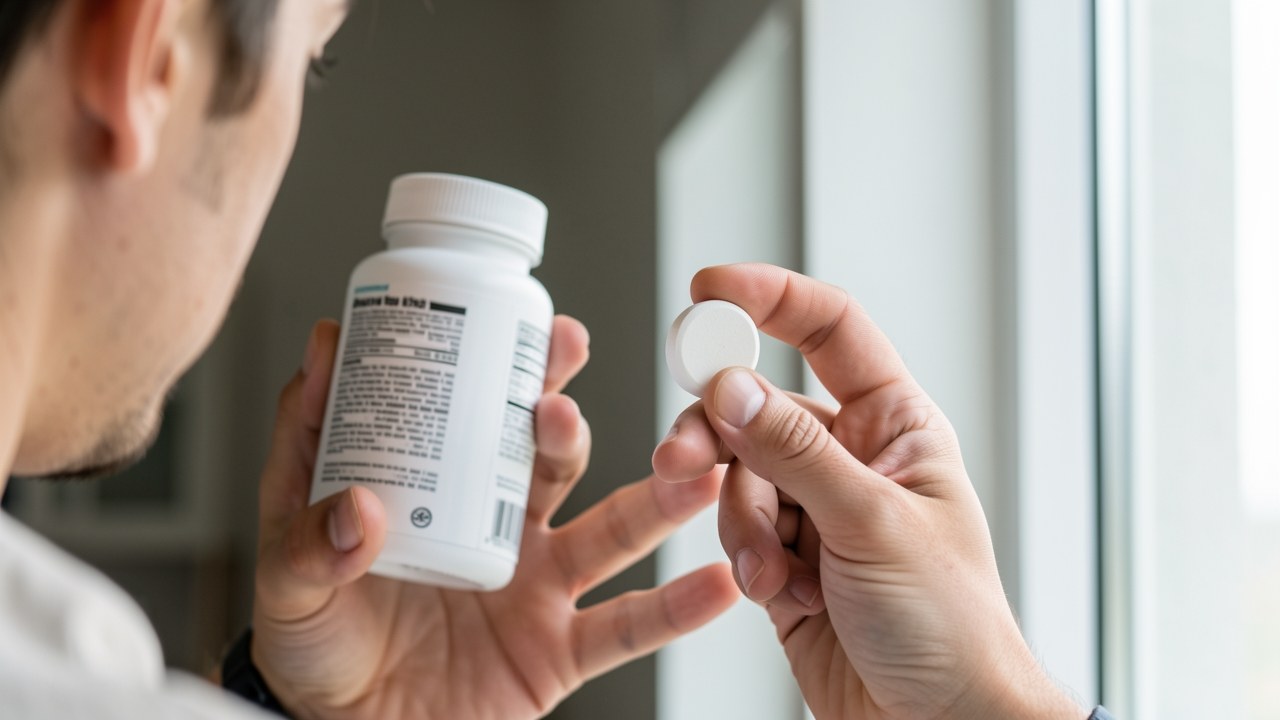
The Supplement Facts panel on a product's label is your window into its contents. A high-quality supplement will disclose the exact amount of every active ingredient. In contrast, a proprietary blend may list only the total weight of a group of ingredients, without revealing the individual dosages. This lack of transparency can make it difficult to assess whether the product contains effective amounts of each ingredient.
While proprietary blends are not inherently low-quality, they make it harder to evaluate the product's actual composition. If a label uses a proprietary blend, consider whether the manufacturer provides any additional information about the relative amounts of each ingredient, either on the label or through customer service.
Full ingredient disclosure allows you to compare the amounts against established evidence to determine if the dose is likely to be effective. It also allows you to avoid ingredients you may not want or need.
- Prefer labels that list each ingredient with its specific amount.
- Be wary of proprietary blends that list only the total weight.
- Understand that a lack of ingredient-specific amounts limits your ability to assess the product.
Sources: Dicentra, Nutraceuticals World
Evaluating Ingredient Forms and Amounts Against Evidence
Even if a supplement contains a well-known vitamin or mineral, you should check whether the amount matches what research suggests is effective. For some nutrients, the dosage is critically important. For example, a supplement that contains only a small fraction of the amount shown in studies may not provide the expected benefit.
The form of the ingredient matters too. Some forms may be better absorbed than others, but this varies by nutrient. It is not always the case that a more expensive or complex form is superior.
When evaluating a supplement, look up the evidence for the specific ingredient form and dosage. This requires some research on your part, but it is essential for making an informed choice.
- Compare the amount on the label to published research.
- Check the ingredient form and consider its absorption, but remember that this varies by nutrient.
- Consider that higher amounts are not always better; safety matters.
Sources: Dicentra, Nutraceuticals World
Spotting Red Flags for Poor Quality
Certain signs can indicate that a supplement may not be high-quality. While some red flags overlap with earlier points, others are distinct warning signs to watch for.
A supplement label that makes unrealistic promises, such as "cures" or "treats" a disease, is a clear red flag. Additionally, a product that lacks basic information like a lot number or expiration date may not meet quality standards. Be wary of brands that use fear-based marketing or pressure tactics, as these often indicate a focus on sales rather than quality.
Another warning sign is a lack of transparency: if a company is reluctant to provide details about its manufacturing processes or testing, that may signal something is being hidden.
- Look for unrealistic health claims, such as "cures" or "treats" a disease.
- Check for missing lot numbers or expiration dates, which can indicate poor quality control.
- Be cautious of fear-based marketing or high-pressure sales tactics.
- Steer clear of brands that are not transparent about their manufacturing processes or testing.
- If a product is significantly cheaper than comparable alternatives, it may be cutting corners on quality.
Sources: Dicentra, Natural Products Association, Nutraceuticals World
Cost vs. Quality: When Price Is a Warning Signal
It can be tempting to assume that a higher price means a higher-quality supplement, but that is not always the case. Conversely, an extremely low price can be a red flag. If a supplement is significantly cheaper than its competitors, it may be using lower-quality ingredients, skipping essential testing, or cutting corners in manufacturing.
However, a high price does not guarantee quality. Some expensive supplements may not deliver the promised benefits. The key is to evaluate the product on its merits: does it have full ingredient disclosure, third-party testing, and a reputable manufacturer? If so, the price may be justified. If not, you might be paying more for the brand than for the actual quality.
Consider the cost per serving, but also consider the value: a slightly more expensive supplement with clearly verified quality may be a better investment than a cheaper product that does not reveal its credentials.
- Extremely low prices may indicate lower quality ingredients or inadequate testing.
- High prices do not automatically mean high quality.
- Evaluate the overall value, not just the price, by checking the product's quality markers.
Sources: Dicentra, Natural Products Association, Nutraceuticals World
Frequently asked questions
How can I verify a manufacturer's cGMP compliance?
You can ask the manufacturer directly for certificates of analysis (COAs) and information about their cGMP processes. The FDA's website may have inspection records, warning letters, and recall information, but it is not comprehensive, and the FDA inspects only a small percentage of facilities each year. So, a lack of an inspection record does not mean the manufacturer is non-compliant.
Sources: Dicentra, Natural Products AssociationWhy should I be wary of proprietary blends?
Proprietary blends are a concern because they list only the total weight of a combination of ingredients without showing the amount of each individual ingredient. This lack of transparency makes it difficult to assess whether the product contains effective doses of every ingredient. Without knowing the specific amounts, you cannot fully evaluate the product's quality or compare it to evidence-based dosages.
Sources: Dicentra, Nutraceuticals WorldHow can I tell if a supplement contains what the label says?
Look for supplements that have been third-party tested by organizations such as USP, NSF, or ConsumerLab. These organizations can verify that the product contains the ingredients and amounts listed on the label, but their specific criteria vary. Additionally, you can ask the manufacturer for a certificate of analysis (COA) for the specific batch, which provides test results.
Sources: Dicentra, Natural Products AssociationWhat is the difference between a USP and NSF seal?
USP and NSF are both independent organizations that offer certification programs for dietary supplements. Both test for product quality, but there can be differences in their specific standards and testing methods. Some products may carry both seals, indicating compliance with both programs. Check the organizations' websites to understand the exact criteria for their respective seals.
Sources: DicentraHow can I find out if a supplement has been recalled?
You can check the FDA's website for a list of dietary supplement recalls. You can also subscribe to recall alerts from the FDA. Additionally, if you have concerns about a specific product, you can contact the manufacturer directly to ask about any recall history.
Sources: Dicentra, Natural Products AssociationShould I choose a multivitamin or individual supplements?
The choice depends on your individual nutrient needs and health goals. A multivitamin can be a convenient way to cover multiple potential nutrient gaps, but it may not provide therapeutic doses of specific nutrients. Individual supplements allow for more targeted dosing but can be more complex to manage. Consult a healthcare professional to determine what is appropriate for you.
Sources
- cGMPs for Dietary Supplements Explained — Dicentra
- The New Food Current Good Manufacturing Practices and Their Effect on Dietary Supplement Quality: What You Need to Know — Integrative Medicine: A Clinician's Journal (via PubMed Central)
- Dietary Supplement CGMPs (current Good Manufacturing Practices) — Natural Products Association
- Establishing Specifications as Required by Dietary Supplement cGMPs — Nutraceuticals World
- FDA Regulations to Establish Minimum CGMP Requirements for Manufacturing, Packaging, Labeling, and Holding of Dietary Supplements — Epstein Becker Green
- Federal GMPs for Dietary Supplements — Natural Products Association